

Half Lives
On Bad Bunny, Othering, and How a Medieval Slur Found a Second Life in Puerto Rico...


(originally self-published in Black Body Index 2022 — excised in 2024 editions from Book Works UK due to length. This is the original, unabridged version )
for Katsí Yarí Rodriguez
2013
Sale petit cagot was my feeble attempt at brainy French flirtation with brainy French scholar, Nawelle. I so wanted to impress the woman I once publicly declared I’d marry (before an audience that included my mother and McClaimed actor Bruce Willis). But Nawelle had no idea what I meant by sale petit cagot, and like most things I’d ever fix my mouth to say or click together for text, she took it in stride. It was the word cagot in particular she didn’t recognize. And when it became abundantly clear that Nawelle wasn’t familiar with the term (you sure?), I felt a sudden embarrassment for having used the word while unaware of its meaning or history. I knew where and in what context I’d encountered the phrase, but I hadn’t yet understood its deeper historical implications. Sale petit cagot was the nickname earned by a school-age Arthur Rimbaud after he’d attacked a group of much bigger boys at his Catholic school for splashing each other with the sacrament of holy water. Young Rimbaud, sweet santurrón, for his (self) righteous indignation earned the nickname sale cagot or sale petit cagot—translated as dirty hypocrite[1] or sanctimonious little so and so[2],respectively. Not the pet name I imagined and certainly not one fitting for Nawelle, whose elephantine memory, ethical integrity, and tenderness make her anything but a hypocrite. Still, both translations seemed to treat the word cagot as vague metonym for an undesirable other, the absolute nature and history of which remained a mystery to me.
Words hold their meanings for as long as those meanings fulfill our happiest expectations—until the day that we, for whatever reasons, begin to dismember, misremember, surrender, let go of the utility of the definitions we agree upon by consensus. That semantic meaning is itself marked by these indeterminate half-lives we should consider as much mercy as tragic dissolution. To be bound by words that no longer serve us, or worse, actively harm us, is to live through a particular form of psychic hell on earth—one that perhaps overdetermines our notion of an afterlife. But an afterlife, nonetheless. For the noumenal substance that words represent goes on living, well after the fact of the sign’s demise.
Always playing by ear, my sonic assumption of cagot’s meaning was, I’m embarrassed to say, closely related to the Spanish verb for shitting. Cagot as in cagón—a term that in Puerto Rico might refer to a loser, a wimp, a trouble-making little shit. And if this was my assumption, you might wonder why I’d ever think sale petit cagot would be an appropriate nickname for a beloved friend. Even in jest. I guess, again, my desire to impress outpaced my willingness to be thoughtful and deliberate. What made it a truly stupid use of language, as opposed to just ignorant, was how arrogantly I used it anyway, trusting that my intentions were clear whether or not it carried the presumed meaning. Fortunately, my use of cagot between us was nothing more than a harmless failure of humor on my part. Even in its worst sense, the word cagot has so little to do with Nawelle or contemporary modes of speech c. 2015 that its use could only fall flat. Maybe. It meant nothing concretely to either of us, so I could get away with the gesture of a wink and a smile as sufficient enough to say I meant no harm. Just jokes. Just a playful jab. But what if it had touched a nerve? What if this was deeply offensive to Nawelle, to some part of her history I neglected to recognize? And what if cagot, broadly speaking, has more to tell us about our present understanding of identity than we realize?
I return to the questions that linger from a year spent hiding inside while the world around us burned and bodies ill with virus piled higher and higher in cities across the globe: who are you, who am I, who are we without the prevailing markers that constitute our identity? What does a nation-state without race look like? In order to approach something like an answer to these questions, we should interrogate the curious history of the Cagots—a medieval, marginalized group of Franco-Iberian peoples often categorized as a distinct (wretched) race or caste by European historians. Cagots and Agotes (as they were referred to on the Basque/Spanish side of the Pyrenees) offer us some insights into how the idea of race works for and within the nation-state, how this relates to notions of post-racial utopia—and how, in Puerto Rico, a troubling past has become our disconcerting present and inevitable future.
[1] Starkie, Enid; “Arthur Rimbaud”, New Directions, 1968
[2] Robb, Graham; “Rimbaud: A Biography”, W.W. Norton, 2001
Qué chango uno
solito con sus graznidos
		y apenas oscureciendo
		semana a semana.
Qué mirarse de pena,
de vivir a reloj.

—Efe Rosario
“El tiempo ha sido terrible con nosotros”
Las hipótesis sobre los orígenes de los agotes y de los cagots son muchas, demasiadas, hasta el punto que incitan a pensar que han sido elaboradas por la necesidad de continuos ajustes. El resultado, en cualquier caso, es que nunca ha sido posible establecer con certeza sus orígenes.
—Antolini, Paola (1989). Los Agotes: Historia de una exclusión. Madrid, España. Ediciones Istmo. Print. pp. 18-19
Hypotheses on the origins of the agotes and cagots are many, too many, to the point that they incite one to think they’ve been elaborated over constant retellings. The result, in any case, is that it’s never been possible to establish with certainty their origins.
A cursory search of the thing I thought I knew revealed a history I hadn’t anticipated. The cagots were, by most accounts, a western European population deliberately segregated fromwith their local, typically Catholic, social structures. They seemed to have concentrated communities on both sides of the Pyrenees (Basque country, Aragón, Gascony, Bearn) and were known as far northwest as France’s Brittany region where they were referred to as Caquins, Caqeux, Cahets, or Cacons in middle/modern Breton. In fact, more than just Cagots, these folks were known variously as:
Agotes, Arcabodz (Arcabotz), Astragotz, Bisigots...Capots, Cassots, Chistrones (Chistones), Chrestiens, Chretiens, Classe de Giezy, Crestiaas (XPistiaas), Cristianos, Cristianos de San Lázaro, Echaureilhadz (Ischaureilhatz), Gafetes, Gafos, Gahectz (Gaetz), Gezitains, Gottes, Gotz, Ladres, Lazarinos, Leprosos (Leprosi), Mesillos, Quagots, Race de Giesi, Race de Gotz. p116
Each of these names, once upon a time, could have been used as an injurious slur to dishonor an otherwise upstanding addressee. And I love that, in retrospect. Not for Nawelle, but for the record. Maybe it’s the pettiness I secretly crave, the schadenfreude on whose breathless blue veins I suck in witness of violent systems and structures reflexively, desperately, consuming their own beneficiaries—like Saturn eating his children in fear of unbecoming, or a giant star collapsing under its own absurd weight—the spectacle of this othering within what was likely a phenotypically homogenous caucasoid group managed to capture my full attention. Between 2015 and 2016 while foment brewed beneath a new nadir in American race relations and we teetered on the edge of what would become the most contentious presidential election of the millennium thus far, these Cagots offered both a way in and out of what I was witnessing come between people.
A few notable texts had been written on the subject, mostly in French, but it was Paola Antolini’s well-researched volume Los Agotes: Historia de una exclusión that offered the greatest single resource on this Basque-French caste often left out of the annals of European history. Originally written in Italian and translated into Spanish, Antolini’s book explores with anthropological rigor the history of these outsiders, focusing specifically on the Agotes and traces of their otherment in the valley of Baztán, a municipality of the autonomous community of Navarre in northern Spain (just east of Basque Country). What the Agotes in the valley of Baztán offered Antolini in the 20th century was not just infrastructural evidence of their segregation from civil society, but first hand accounts of social stigmata from those who remembered it persisting into the first world war.
En el coro de la iglesia de Arizcun [los agotes] tenían un puesto separado. Un día un agote entró en la parte reservada a los perlutos (los habitantes de Arizcun) y, al momento, algunos de ellos le hicieron quitarse de allí agarrándolo por una oreja y gritando: «Oye, tú a tu sitio». (P.A. oriundo de Maya, Baztán, setenta y cuatro años.) p27
In the Arizkun church choir [the agotes] had a separate position. One day, an agote entered the part reserved for perlutos (proper residents of Arizkun) and, immediately, some of them made him leave, grabbing him by an ear and shouting: “Hey, you to your place.”
•
Todos eran carpinteros, canteros o molineros; muchos también eran txistularis y atabaleros. Ellos tenían oficios, pero no tierras, eran arrendatarios en las tierras de otro [la casa noble de Ursua]… Hoy siguen siendo carpinteros, canteros, etc. (Ana Huarte, oriundo de Arizcun, cuarenta años, residente en Pamplona) p28
All of them were carpenters, masons or millers; many were also txistularis and atabaleros (musicians). They had trades, but not lands; they were tenants on the land of another [the noble house of Ursua]... Today they are still carpenters, masons, etc.
For historical context, through much of the medieval period the peninsula was almost entirely consumed by the violence of la reconquista and the medieval inquisition (to be closely followed by the Spanish inquisition). These sanctioned efforts in the name of political unification and religious and filial purity, over several centuries, would carve out of the peninsula a Castilian nation-state and a pronounced national identity. Despite these bloody efforts, what remains to me fascinating about Spain, when considering half-lives and after-lives, is how the violence that begets a sovereign Castilian state with Catholic orthodoxy never truly homogenizes the nation or the land it occupies. Spain remains at war with itself, as heterodox as it’s ever been, as tribal as your favorite pulp fantasy series, as north/south as your favorite civil war soap. Catalonia, at the time of this writing, insists on its right to independence—as perhaps it should. While in the south, the border remains a highly contested and often violent space for North African immigrants and refugees. Perhaps most contentious of all in contemporary Spain is that of the rivalry between Barcelona and Real Madrid. But of course these are not dynamics unique to the Iberian peninsula, or even Europe writ large. Small cracks become great fissures in the face of the state and threaten the integrity of systems and structures designed for perpetuity. One counter-measure employed by the state to preserve its governance and seeming necessity among its citizens is the mobilization and/or weaponization of an unassimilable other. Herein lies the “invencible valor” of those agotes/cagots, miracle epoxy for the burgeoning Basque-French social structures.
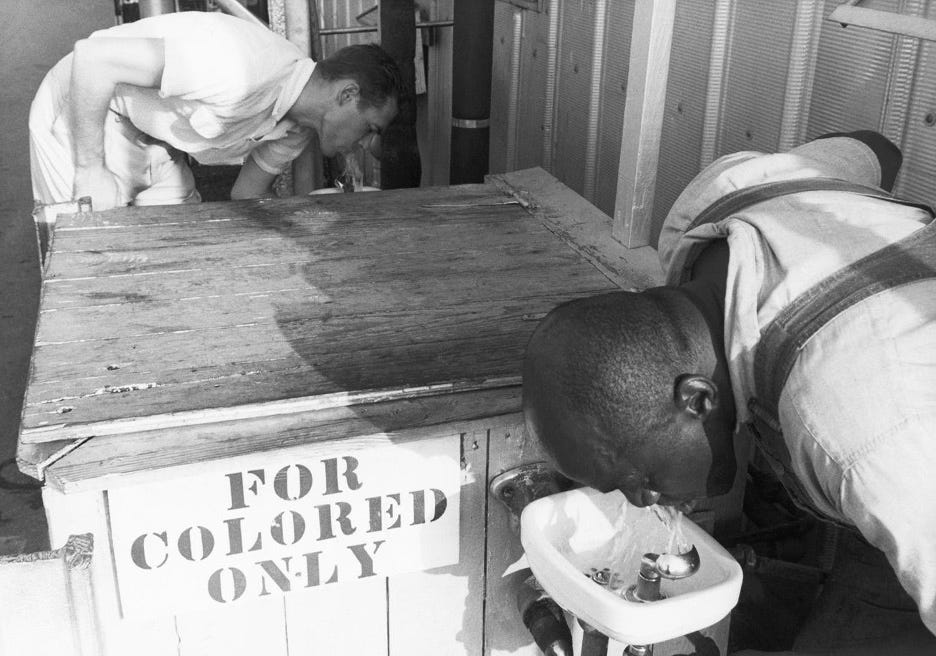
Earliest reference to Cagots dates back to the year 1000 A.D. from a cartulary in the abbey of Lucq-de-Bearn—first cited in la Histoire de Béarn in 1640 (Antolini, 297). Despite a thousand years of speculation and malignant myths regarding their origins, their status as social pariahs has remained unquestioned. In 17th century Navarre, for example, Agotes were court-ordered to “‘wear yellow trim on their cloaks’” to distinguish them from proper citizens[1]. Antolini broadly describes the conditions of their segregated status (c. early-modern Spain) in ways evocative of Jim Crow and post-reconstruction American racial segregation.
Paradójicamente, la presencia de los agotes y de los cagots se nos revela por su exclusión, y las sanciones de esta condición son las que originan los documentos que han llegado hasta nosotros. Estaban obligados a vivir fuera de los pueblos, no se les permitía mezclarse con el resto de la población, ni detentar cargos públicos, ni mucho menos unirse a los demás en matrimonio. Accedían a las iglesias a través de puertecitas especiales, a menudo tenían una pila de agua bendita propia, límite del espacio a ellos reservado. Su separación continuaba en los cementerios, donde se les sepultaba aparte. Su estigma les obligaba a trabajos que ninguna otra persona quería realizar. A partir del siglo XVII se les excluye públicamente de las danzas, pero sin embargo son considerados como los mejores músicos tradicionales y, según veremos, como los señores del orden invertido. Se temía su poder de fascinación; se les atribuían defectos naturales y fantásticos, y aún una especial belleza y un invencible valor. pp. 17-18
Paradoxically, the presence of the agotes and cagots is revealed to us by way of exclusion, and the sanctions of this condition are what originated the documents that have come down to us. They were forced to live outside of towns, not permitted to mix with the rest of the population, or hold public posts, much less join them in matrimony. They accessed churches through special little doors, often had their own basin of holy water, and were limited to the space reserved for them. This separation continued in cemeteries, where they were buried apart. Their stigma forced them to take jobs no one else wanted. From the 17th century they were publically excluded from dances, but nevertheless considered the best traditional musicians and, as we’ll see, lords of the inverted order. Their power to fascinate was feared; natural and fantastic defects were attributed to them, and even a special beauty and ineluctable value.
Here we have pretense for a civil rights case that, at least superficially, mirrors both Plessy v. Ferguson in 1896 and Brown v. The Board of Education of Topeka in 1954. In fact, questions of Agote civil rights and social status persisted in secular and ecclesiastic courts until the mid 19th century. Even after the high court of Navarre officially recognized Agotes in the kingdom as a persecuted peoples and decided to integrate in 1817 (Law LXIX—banning use of the term agote[2]), the decree would meet local resistance for another century at least. Old habits die hard.
Until the 19th and 20th century, the prevailing social structure in most regions of Spain (including the annexed, quasi-autonomous kingdom of Navarre) was predicated on filial-communal hierarchies known as vecindad (neighborhood)—this, from the word vecino or neighbor/inhabitant. Vecindad privileged what were called cristianos viejos, or old Christian families, as proper vecinos—a legal status akin to citizenship. These vecinos were Catholic families with no discernible Jewish or Muslim conversion (via Inquisition) endowed with rights to own and govern land, conduct business, and occupy central roles within the community and church. More distinguished still were those with documented claims to noble blood (hidalgos), especially prominent in northern regions of the peninsula where, unlike the south, it was thought families were less likely to have intermingled (miscegenated) with non-Christian others. Notions of ethno-religious purity strongly factored into one’s place in society, along with the honor and reputation attributed to family names. If one could not prove their purity, even after generational efforts to assimilate (limpieza de sangre), there could be no legal recourse to vecindad. “Jews, Muslims, and other excluded social groups like the agotes were not allowed vecindad in the medieval period, and in the early modern period their descendants—conversos and moriscos—were often denied it as well.” (Kessel, 6) But here, again, Agotes and Cagots present a curious case. They were neither swarthy Moor nor carnal Jews. Agotes and Cagots were homegrown, western European Catholics. So what accounted for this othering and segregation from their fine, white brethren?
The question itself is important and not.
We do this all the time, seeking cause (if not, justification) for something that is inherently unjust because to acknowledge an act or gesture of gratuitous violence is also to acknowledge that we live in a world not governed by discernible cause and effect. This robs us of agency, renders us less than human, and removes from the world (and its governance) any sense of altruistic order and meaning. Let’s take the book of Job as example. What was the cause of Job’s suffering? According to the Bible, G-d’s design was challenged by the adversary and G-d accepted the challenge. It was a bet. Which is to say, blameless Job suffered for no good reason. His dearest friends, Eliphaz, Bildad, and Zophar, couldn’t fathom that such gratuitous misfortune would be the case. But G-d is good! No good reason? You must’ve done something wrong, Job, to piss G-d off like this? The painful paradox here is that the very being that created Job, in essence, was the very being that allowed his suffering. Some Jewish scholars have speculated that the book of Job was written by Moses as a kind of parable illustrating the need to have faith in the midst of unwarranted cruelty and suffering. In a different Abrahamic tradition, your favorite Baptist preacher will point to Job and croon the old cliché that G-d never gives us more than we can handle. In any case, most Biblical commentaries will note that Job was the exception, not the rule of divine conduct. Be that as it may, we see traces of Eliphaz, Bildad, and Zophar’s implicit victim-blaming in every instance a woman is questioned as complicit in her sexual assault, in every article and news report covering the murder of a black body that has attached to it even the slightest hint of a criminal record. Yes, we need every detail, every fact, to properly adjudicate and resolve such cases—but, to seek in the victim some cause for their own misfortune, especially as a means of protecting the dignity of the assailant, is to deem those vulnerable unworthy of the life they’ve been given and is, moreover, a gross abdication of our responsibility to and for one another. I write this not as a reinscription of humanist discourse, but as an assertion of radical indebtedness to all things and people—even or especially people for whom I too may constitute an inherent source of violence.
The specific cause or reason for Agote and Cagot otherness, as a matter of record, remains unclear. They were, however, classified as a distinct race. “Race, in early modern Spain, was a complex concept; it encompassed religious difference, genealogical difference, and social class.” (Kessel, 11). How race itself was thought of and functioned throughout early-modern Europe offers us fascinating insights into contemporary definitions and applications of race—how, for example, these social constructs continue to preserve subject positions and psychic continuities within a social structure by attributing certain values to certain differences. The more things change, the more they seem to stay the same. Agote and Cagot segregation fromwith the early-modern Catholic church in particular, I imagine, shaped their self-image as othered even in the eyes of G-d. Could there have been a heaven or salvation for such a damned race? Evidence seems to suggests they believed their place in the church (and secular society) was something worth legally fighting for (see Emma Hall Kessel’s brilliant masters thesis on Agote discrimination and belonging). Despite a papal bull by Pope Leo X in 1519 decreeing that Agotes “were to be treated ‘like the other good Christians’ in Navarre.” (Kessel, 16), they were still forcibly excluded, made to sit in the bell tower or attend separate services, and the various myths regarding their origins as a distinct race persisted. Early records suggest they were associated with Hansen’s disease. Others still believed they were descendants of early Christians (Albigenses/Cathars), as suggested in Law LXIX. Though this is unlikely if we are to take seriously the earliest reference to Cagots in the year 1000. The first and most notable gathering of Cathars, the Council of Saint-Félix, would not arrive for another century and a half (Antolini, 298). More absurd were myths to do with their earlobes, or other such forms of perceived body dysmorphia. Whatever the mark of their distinction (real or imagined), those considered pure and with some functional measure of authority would use whatever means to augment and further fabricate the narrative of Agote/Cagot otherness, keeping them in their place. Further implying that their difference was intrinsic, in the blood. While Agote segregation may have seemed like a condemnable practice (in the abstract) to the greater entity of the Catholic church, it certainly mattered to those trying to preserve power and order in pockets along the Pyrenees. In essence, the question of what made Agotes and Cagots so different in the first place should be considered a red herring. The origins of their difference, as complex and historically fascinating as they may be, perhaps distract from the caste’s essential function as a class fixed to the fringes of propriety.
[1] Kessel, Emma Hall; UNC Chapel Hill 2019 Masters Thesis, “WITHOUT DIFFERENCE, DISTINCTION, OR SEPARATION”: AGOTES, DISCRIMINATION, AND BELONGING IN NAVARRE, 1519-1730
[2] Ley LXIX; 1817, December 27, Cuaderno impreso de las leyes y agravios del Reino de Navarra, Cortes Generales de 1817-18, Pamplona, 1819, pp. 140-141 “Que á nadie se llame Agote, bajo las penas que se expresan. S.C.R.M. «Los tres Estados de este Reino de Navarra que estamos juntos y congregados celebrando Córtes generales por mandado de [Vuesa Merced]. decimos: que en este vuestro fidelísimo reino se conoce, aunque en número bastante corto, cierta clase de gente, llamada Agotes, á la cual se atribuye diverso orígen, segun la variedad de opiniones, y el Padre Josef Moret en los Anales de este Reino, tomo 3, página 119 conjetura ser descendientes de las relíquias disipadas del gran egército de Albigenses, que fue derrotado en el año de 1214 por el Conde Simon de Monforte, junto al Castillo de Murello, sito á las márgenes del Garona; y aunque positivamente no consta su orígen, esas y otras conjeturas y vulgares tradiciones han sido causa, de que hasta ahora se les haya tratado con notorio desprecio, reputándolos viles, y excluyéndolos de todos los oficios públicos, y aun puede decirse que del trato social y civil; pero considerando nosotros, no ser justo que se tolere por mas tiempo una costumbre nada conforme á los principios de nuestra Sacrosanta Religion, contraria á las Reglas de la Sana política, é injusta por sí misma, pues que los llamados Agotes son Católicos, y son Navarros, como todos los demas, hemos creido propio de nuestra obligacion elevarlo todo á la superior noticia de V.M., para que esta desgraciada porcion de vuestros fieles súbditos, sea restituida á la consideracion pública, que le es debida, y se estreche en fraternales lazos con todas las demas, sin distincion ninguna; y á ese fin; Suplicamos rendidamente á V.M. se digne concedernos por Ley, que á nadie se llame Agote, sopena de injuriador, el que tal dijere, y que los denominados hasta ahora tales, hallándose avecindados en los Pueblos ó sus Barrios, ó Arrabales, sean reputados como los demas vecinos, ó habitantes, para todos los efectos y oficios, segun la clase á que deban corresponder. Asi lo esperamos de la notoria justificacion de V.M., y en ello &c.= Los tres Estados de este Reino de Navarra.»”
It is the existence of the child, and their knowledge of its existence, that makes possible the nobility of their architecture, the poignancy of their music, the profundity of their science. It is because of the child that they are so gentle with children. They know that if the wretched one were not there sniveling in the dark, the other one, the flute-player, could make no joyful music as the young riders line up in their beauty for the race in the sunlight of the first morning of summer.
—Ursula K. Le Guin, “The Ones Who Walk Away from Omelas”
Agotes, unlike new world blacks, were not the objects of systematic (black) enslavement and terrorization. They were ostensibly freefrom conditions of chattel and indentured servitude and could, theoretically, leave vecindad and/or assimilate (pass awkwardly) into its privilege. Even so, despite their individual freedom, they were conceptually fastened to the social structure. Insofar as they were identifiably other, Agotes remained systemically ostracized and subject to violence from non-Agotes (Kessel, 28) for nearly a millennium. If slavery “is the permanent, violent domination of natally alienated and generally dishonored persons.”[1] Agotes were to remain socially dead, fungible tokens.
This, I think, is an essential mechanism in the preservation of power within social structures and fascinating evidence of race as an instrument of power. Vecindad and hidalguía relied on the perennial outsider class of the Agote, in absence of more obvious heretical others, to reinforce lineal claims to the ethno-religious purity that moored them to “privilege”. Of course, much of what we consider privilege in such contexts relies on denial of the basic rights and freedoms of the other. Agotes could marry (typically within their own race) and they were allowed to attend church (as long as they did not interfere with or impose upon vecinos’ worship). Such systems allow for easily apprehensible binaries of good and evil, pure and impure, black and white[2]—all of which have been historically difficult to unlearn or let go of for the tonic clarity they provide a common subject. Which is exactly why, even after a papal bull in the 16th century and a royal decree in the 19th century to integrate the church in Navarre, communities in the region would not remit the relative position of Agotes in their social structure. Like the imprisoned child at the heart of Ursula Le Guin’s utopic Omelas, Agotes were a fundamental part of vecindad, and without them, notions of northern Spanish nobility would have no undercommons. The structure would collapse under the weight of its own, unsupported fiction and spectacularly consume itself—which is, in effect, what this was.
...agotes y cagots, a diferencia de otras clases externas de marginados, tuvieron históricamente un espacio propio. Así, los gitanos, a los que serán asimilados agotes y cagots, llegan a esta zona de Occidente en el siglo XV, cuando «la conciencia sedentaria, muy enraizada ya en las poblaciones europeas, se une al miedo suscitado por los vagabundos», y no tienen espacio en los pueblos, del mismo modo que no lo tienen en las representaciones tradicionales: su singularidad desconocida e imprevista pronto es excluida. Los agotes habitaban, en cambio, en barrios y pueblos especiales, espacios tradicionalmente peligrosos, donde se vuelcan miedos muy enraizados en las creencias populares. 23,24
... agotes and cagots, unlike other classes of marginalized people, historically had their own space. In contrast, gypsies, those that would become assimilated as agotes and cagots, arrive in this part of the West in the 15th century, when “settler consciousness, already deeply rooted in European populations, is bound by its fear of vagabonds,” and they do not have space in the villages, in the same way that they do not have it in traditional representations: their unknown and unexpected peculiarity is soon othered. Agotes, conversely, lived in special neighborhoods and towns, traditionally unsafe spaces that evoked fears deeply rooted in the popular imagination.
The village of Arizkun’s geographical proximity to “neighboring” Bozate was an integral part of this system. Though Agotes occupied spaces in villages throughout the valley of Báztan, Bozate (a hamlet within the greater Navarrese municipality of Arizkun) was the dark side of town, the wrong side of the tracks, where Agotes were more or less expected to congregate in their quasi-leperous segregation from the vecinos of Arizkun village. Their fixed position (stuckness), relative to the perceived locus of honor, purity, and nobility, was vital to the imaginary order of hidalguía. Like Saïd’s Orientalism, the Agote occupied a cardinal position outside of and away from what was right.
Left out.
Not simply a site of geo-political otherness, Bozate (and the Agotes that lived there) was a significant psycho-social aspect of vecindad in Navarre.
Over-thereness.
Even after use of the word agote was banned as a racial slur (primarily between non-Agotes), it was colloquially replaced with the no-less offensive (if legally permissible) demonym bozatarra (a person from Bozate). The shame this place-name carried was comparable to that of agote. Rather than identify oneself as having come from Bozate, residents were wont to say instead that they came from “‘[el] barrio’” (Antolini, 115).
What’s in a name, anyway?
While not so interested in deciphering their mysterious origin story, I remain curious about the semantic evolution of the pejorative cagot—from medieval and early modern Europe, to the Romantic period of young Rimbaud, and finally in the foiled flirtations of our anthropocenic age.
I hope, by now, we have some sense of its earliest uses as a descriptor for a European racial outgroup, the conditions of whose socio-political segregation persisted into the 20th century. But the term, already of dubious etymological origin, continued its semantic decay before arriving at new meaning in early modern France. Antonlini devotes a chapter of about twenty pages to the etymology of the word.
•
CAGOT, OTTE. adj. Faux devot, & hypocrite, qui affecte de monstrer des apparences de devotion pour tromper, & pour parvenir à ses fins. Ce mot est injurieux, & vient d’une condition de personnes habituées en Bearn & en quelque partie de la Gascogne, qu’on croit descendus des Visigots, qui sont tenus pur ladres aux quels est interdite par la Coutume la conversation avec le reste du peuple & qui logent en des petites maisons écartées. Ce nom leur a été donné comme qui diroit caas Goths ou chiens Goths, en haine de l’Arianisme dont les Goths avoint fait profession. (1690, Dictionnaire Universel) p 123
CAGOT, OTTE. adj. Falso devoto & hipócrita, que afecta mostrar apariencia de devoción para engañar, & para conseguir sus fines. Este término es insultante, & tiene su origen en una situación de personas que viven en Béarn & en algún lugar de Gascuña; se cree que son descendientes de los visigodos; son considerados como leprosos a los que se les prohíbe, según la costumbre, el contacto con el resto del pueblo, & que habitan en pequeñas casas apartadas. Se les ha dado ese nombre como quien diría caas godos o canes godos, por odio al arrianismo que profesaban los godos.
•
CAGOT, OTTE, adj. Hypoxrite, bigot. Il a l’âme cagotte, el veut passer pour homme de bien, ce n’est qu’un cagot. (1694, 1ed Dictionnaire de l’Académie Française) p123
CAGOT, OTTE, adj. Hipócrita, santurrón. Tiene el alma cagotte, quiere hacerse pasar por un hombre de bien, no es más que un cagot.
•
CAGOT adj. Celui, celle qui a une dévotion fausse ou mal entendue (…) p120
CAGOT, adj. El o la que tiene una falsa devoción o una devoción mal entendida (…) (1835, 6ed Dictionnaire de l’Académie Française)
CAGOT adj. He or she who bears a false or misunderstood devotion (...)
•
A simp, a zealot, a goodie-two-shoes, a bad-faith actor, over-saved and under-appreciated, glass-house-head-ass negus preaching morals in tattered underwear. In this early-modern sense of the word, we might consider unrequited love an essential condition of the cagot. That is, I’m a cagot whenever committed to loving someone or something that can’t or won’t love me back. I’m a cagot when I’ve become the unincorporated territory of a sovereign that will not recognize my right to self-determination. I’m a cagot when my voice is silenced or secondary within the social structure. But perhaps I’m premature with a 21st century interpretation.
Its use as a schoolyard insult against the soon-to-be gun-running French symbolist poet was that most often associated with a self-righteous hypocrite. Antolini posits, with assistance from Michel Foucault, that a potential reason for its change in meaning begins in the 17th century with the Cartesian moment. Rationalism, scientific deduction, and works of great literature began to spread and with these, the gradual disappearance of outmoded forms of superstitious and magical thinking (123). This Cartesian understanding of the word and its psycho-social dimension has hobbled quietly into the 21st century, where it’s become something of an archaism. Its cousin, on the other hand, the Basque/Spanish cognate agote has evidently persisted with more lasting ties to the social structure, particularly where vecindad is still acknowledged as a legitimate form of governance or lineal privilege. But agotetoo has faded, thankfully, from common parlance—its nasty connotations and history perhaps implicitly agreed upon as no longer befitting civil discourse.
Maybe we can say these words have been put to pasture—or very nearly. Nawelle was in no discernible way offended by my calling her a cagot because the word has lost its meaning and power as a pejorative sign. But the imprecise and strangering distinctions[3] that are born as a result of group identity formation persist, as does our documented history of these words and their implications—which is what I find so fascinating about a unique instance of semantic recurrence in the former Spanish, now American colony of Puerto Rico where a notable variant of the cagot/agote has emerged.
En 1829, [Charles] Nodier, tratando directamente de la etimología de la palabra cagot en el Examen critique des Dictionnaires de la Langue Française sostiene que «en una época más próxima se ha sustituido el nombre de casta de estos desgraciados por un nombre griego que sonaba más o menos como este Kakos, significa malus, improbus, ignobilis». p120
In 1829, [Charles] Nodier, assaying the etymology of the word cagot in the Examen critique des Dictionnaires de la Langue Française maintains that “in a bygone era they substituted the caste name of those disgraced with a Greek name that sounded more or less like Kakos, meaning malus, improbus, ignobilis”
[1] Patterson, Orlando, “Slavery and Social Death” p13
[2] Ironic when considering one of the prevailing myths about Agote/Cagot origin was their having descended from Albigenses—a quasi-Manichean cult of Catholic Christianity.
[3] Hayden, Robert, “[American Journal]”; Collected Poems of Robert Hayden, Liveright Publishing Corp, 1978, 1982.
“Por dentro siempre voy a ser caco”
—Bad Bunny “Ser Bichote”
2015
I met Katsí in November of 2015 when she was a graduate student in Brown University’s Africana Department. Katsí, whose full name Katsí Yarí in Taíno means Golden Sun, had come to Providence from Puerto Rico and we soon bonded over an interest in the history of blackness on the island. Our first formal meeting was at L’Artisan Cafe in Wayland Square where she surprised me with a copy of Fernando Pico’s history of Santurce, a neighborhood in San Juan with its own storied legacy of Caribbean blackness (one that includes both Katsí and my grandfather, Elías Sanchez). A true Boricua never shows up empty-handed, so I shouldn’t have been surprised by the beauty and generosity of her gift, but I was. Sad to say I can’t remember whether we ate or drank anything that afternoon, but the conversation, the tenderness and intensity of our exchange, was one that I will never forget—in part because Katsí shared with me her intention of researching a little discussed phenomenon in Puerto Rico. Cacos, she explained, is a pejorative term for a maligned group of people in contemporary Puerto Rican society.
In that moment everything I’d been processing about the curious history of the cagots came full circle. I recognized immediately what the Caco was in the long arc of the moral universe and felt simultaneously thrilled and heartsick to have discovered (via Katsí’s research interest) a form of socio-linguistic revenant. As is often said in Puerto Rico, te conozco bacalao / aunque vengas disfrazao.
The expression, caco, as a colloquial descriptor was new to me. As a Puerto Rican born and raised in the states, my ties to culture as it evolves on the island come staticky through the wire. So my goal here is not to unearth the socio-political and historical nuances of cacos as a demo. That I shall leave in the capable hands of Katsí Yarí, a more thorough and well-equipped scholar whose research on blackness in 21st century Puerto Rico and the Caribbean continues to offer vital insights into trans-cultural disseminations, racialization, violence, queerness, and emerging feminisms. Rather than deep-dive into the origins of the caco, I’d like instead to connect its emergence in Puerto Rico to its precedents along the Pyrenees. Unfortunately, before we can assay the connections between cacos and cagots, I should acknowledge that nearly half of Americans remain unaware of Puerto Rico’s political situation (according to a 2017 Morning Consult crosstabulation). Fewer still are aware that its liminal status is inextricably linked to first contact, indigenous genocide, the trans-Atlantic slave trade, and American capital/imperial exploitation. In order to understand how and why cacos have (re)emerged on the island, some of the circumstances of Puerto Rico’s annexation to the United States bear repeating.
Yo le meto como un submarino
Loca con los cacos, pero que sean finos
Chingo con el gato pero no se vino
Tranquila, que yo te resuelvo
Me gusta pero no me envuelvo

—Bad Bunny “Bichiyal”
With newfound confidence and prosperity in the early 19th century after having taken both coasts from indigenous tribes and European colonizers, the united colonies that would become the United States began preparations for its hand in the global game of Risk. Plans for American expansion would be interrupted by the Civil War, but resumed relatively soon after the Reconstruction period. In 1898, after the Spanish-American war, the United States received from the Kingdom of Spain (via Treaty of Paris): the Philippines, Guam, Puerto Rico, and Cuba as protectorate. Before the war, one largely manufactured by the U.S. Navy and yellow journalism (Remember the Maine! To hell with Spain!), the government had already invested quite a bit of time and capital into Puerto Rico as a colonial and economic prospect. As the nation still recovered from the bloodiest war in its history, the idea of pursuing new economic and political avenues seemed promising. This new conquest helped galvanize a polarized nation.
The rapacious ideology that motivated (and continues to motivate) the annexation of these territories arguably has its origins in the Monroe Doctrine—a policy that, by declaring European intervention in the hemisphere a hostile act against the United States, allowed for the arrival of a new military strongman in the region. The U.S. from that moment forward made it known they’d be collecting the lunch money. Any intervention in “the Americas” would have to come through the U.S and may otherwise be considered pretense for war. Moreover, the acquisition of these territories broadened the legal borders of American jurisdiction, especially important before and after the World Wars of the 20th century—conflicts that gave rise to modern globalization and international policy. By the turn of the 20th century, this little island had become a jewel in the secret crown of American imperialism and the U.S. quickly began to legislate the conditional terms under which the island would be governed. As Judith Resnik and Vicki C. Jackson note in the introduction to Federal Court Stories,
...the effects of the Civil War radically changed the role for the federal judiciary. In the immediate wake of the war, Congress turned repeatedly to the federal courts to enforce federal norms. As a result, between 1867 and 1875, whole new sets of claimants—state prisoners claiming violation of their constitutional rights, individuals bringing infringement of their federal civil rights, and those raising federal questions of all different sorts...gained access to federal adjudication. (1)
In fact, after the Spanish-American war and the Treaty of Paris, it would be the U.S. federal court system that decided Puerto Rico’s status. As a result of the 1900 Foraker Act, Puerto Ricans were considered U.S. nationals. Their status as nationals, however, did not accord them citizenship rights. In 1901, a series of cases known as the insular cases were heard by the Supreme Court regarding its annexed “insular” possessions. The most notable of these was the Downes v. Bidwell case which labeled these possessions “unincorporated territories” and, as such, were not protected by the laws and rights of the constitution. Put another way, the U.S. could govern these insular possessions however they saw fit, especially with regard to capital and revenue, because these were not (yet) U.S. citizens. “If those possessions are inhabited by alien races,” wrote justice Edward D. White,
“differing from us in religion, customs, laws, methods of taxation and modes of thought, the administration of government and justice, according to Anglo-Saxon principles, may for a time be impossible...We are therefore of the opinion that the island of Porto Rico is a territory appurtenant and belonging to the United States, but not a part of the United States within the revenue clauses of the constitutions; that the Foraker act is constitutional, so far as it imposes duties upon imports from such island, and that the plaintiff cannot recover back the duties exacted in this case.”
The decision was split and the judge who delivered the court’s plurality opinion on Downes v. Bidwell was associate justice Henry Billings Brown, the same judge who in 1896 authored the majority opinion on Plessy v. Ferguson (which paved the way for Jim Crow). The Plessy v. Ferguson decision to institute “separate but equal” racial segregation for American citizens provided a foundation for ideological dissent among a Puerto Rican intelligentsia invested in political autonomy at the turn of the century.
One such “dissident” was Puerto Rican lawyer, politician, and proto-Independentista Rosendo Matienzo Cintrón. Cintrón’s 1911 op-ed “La guachafita fá” was a scathing critique of the idea of American citizenship for Puerto Ricans.
El negro de los Estados Unidos tiene allá su problema, en el que nosotros no podemos entrar por el momento sino en una línea general humana. Pero el negro, sea por sus culpas o por las ajenas, no es tal ciudadano de los Estados Unidos. Es un perro, un buey, privilegiado en cuanto se le permite tener propiedad, pero es un ciudadano cosa o es una cosa ciudadano, no es un ciudadano.
Si los blancos quieren los negros votan, si no no votan; si los blancos quieren viven, si no mueren ahorcados o apedreados o fusilados como un perro o un lobo rabioso.
Habrá, pues, si se llegase a dar una tercera ciudadanía, tan envilecedora para los americanos como para los puertorriqueños, una ciudadanía dada por conveniencia, por negocio, por cálculo, por business. El negocio trabado entre el impudor welelé y la codicia yankee. La ciudadanía sin la soberanía es una ciudadanía que no se tiene para enaltecerse sino para envilecerse. La toga viril al caer desprestigiada sobre la espalda del enclenque pendanga, se convierte en el acto en pobre túnica de esclavo. Y queda, por modo tan singular, rebajada la ciudadanía sin elevar al agraciado con ella.
Where previously he favored incorporation as a state (and was himself appointed by President William McKinley to the first American run Executive Cabinet at the turn of the century), in his last years he supported radical autonomy for the island. In part because he’d recognized and feared American colonial exploitation in the guise of diplomacy and mutual benefit. Too, as a lawyer trained in Spain, practicing in Puerto Rico, invested in the island’s political future, Cintrón must’ve been aware of and moved by the ongoing American saga of the Civil War and its aftermath. I have to imagine that Plessy v. Ferguson signaled to Cintrón, and the rest of a watchful world for that matter, that the U.S. would continue to deny its black (and non-white) citizens their basic rights—a sure sign of what to expect from U.S governance in the 20th century.
To make his point absolutely clear, Cintrón evokes American blackness as analogue for the island’s liminal status, falling prey to an illness common among liberal adherents of a racialized social structure. It’s critically important to note a few points about this rhetorical maneuver. First is that we should be generally vigilant of these arguments when not mobilized fromwith blackness itself. This is yet another example of blackness instrumentalized (and ventriloquized) for the sake of those looking to assert their non-black or even anti-black position within a racialized social structure. “The essential theatricality of blackness, of the commodity who materially objects beyond any subjunctively posited speech, is evoked in the service of metaethics.” (Moten, 234). Blackness as such exists in service of some cause or ideology that has little to no investment in blackness itself. But because we’re dealing with a Caribbean island subject to both indigenous genocide and the trans-Atlantic slave trade (abolished conditionally in 1873), we’re also dealing with what can be considered a black/mestizo people (despite perhaps being the beigest of the Antilles). Which brings us to the second critical point regarding Cintrón’s conflation of blackness with political otherness. Blackness and indigeneity, within the broader scope of Puerto Rico’s history, have been selectively deployed to perpetuate myths of the island as racial utopia. The most common narrative is that Puerto Ricans are the offspring of European, indigenous, and African ancestors (typically in that order) and the resultant mestizaje produced one people, not reliant on race to determine social value because we are all the same. Color-blindness, in other words, functions in Puerto Rico just as it does in liberal pockets of the states. Eschewing race as a social determinant (because we are always already equal in the eyes of God, Agüeybaná II, or George Washington) invalidates the needs of black and brown bodies while reinforcing white supremacy. In fact, for hundreds of years there has existed on the island the systematic (nigh ubiquitous) pursuit of European standards of beauty and racial purity referred to as aclarando la raza (not unlike Navarre’s limpieza de sangre). Such programs (and programming) exist throughout Latin America. Though it should also be stated that it was not Cintrón’s objective in Guachafita to make any particular racial claim about the island itself.
Which brings us to a final, critical point, or perhaps an apologia for Cintrón’s Guachafita. However one racially qualifies Puerto Rico (an island that consistently self-identifies as majority white/hispanic, according to U.S. census data), the island does not and has never had recourse to self-determination. The 1917 Jones-Shafroth Act would formally grant U.S. citizenship to Puerto Ricans born on the island after 1899. But Puerto Rico remains an unincorporated territory under jurisdiction of the U.S. legislature which has plenary power over the island. Puerto Rico is forbidden from trade with any national entity other than the U.S., is not allowed to declare bankruptcy, has no voting power in the U.S., is nevertheless expected to serve in the military (and drafted when such policies were in effect). And these are just a few of the prohibitions I can recall off top. In this sense, Puerto Rico and its proper inhabitants exist under what Cintrón postulated would be a third citizenship—after that of northern whites and northern blacks would come that of Puerto Ricans, whose lives are considered quasi-genocided dyspossessions subject to accumulation and fungibility (Wilderson). Which is to say, Puerto Ricans represent an unusual commingling of black and red, of slave and savage, of flesh and genocide, of no-return and return-our-land—and, by dint of phenotypic whiteness, the capacity to assimilate and ascend within the dominant social structure (by perpetuation of systemic violence). To insist then on such a curated self-image (fantasy, imago) that serves as a closed loop, feeding only on itself, is to have crafted a hermeneutic circle within and out of which Puerto Ricans are conscribed—noble savages, in effect, for whom recognition and incorporation is impossible (Wilderson). But, if all noble savages are alike (i.e. of european, black, and indigenous ancestry and therefore one people) then how are its social structures regulated and by what features are they stratified?
We are witnessing, on the island at least, the caco-phanic recrudescence of medieval othering that emerged along the Pyrenees. Cagot as caco.
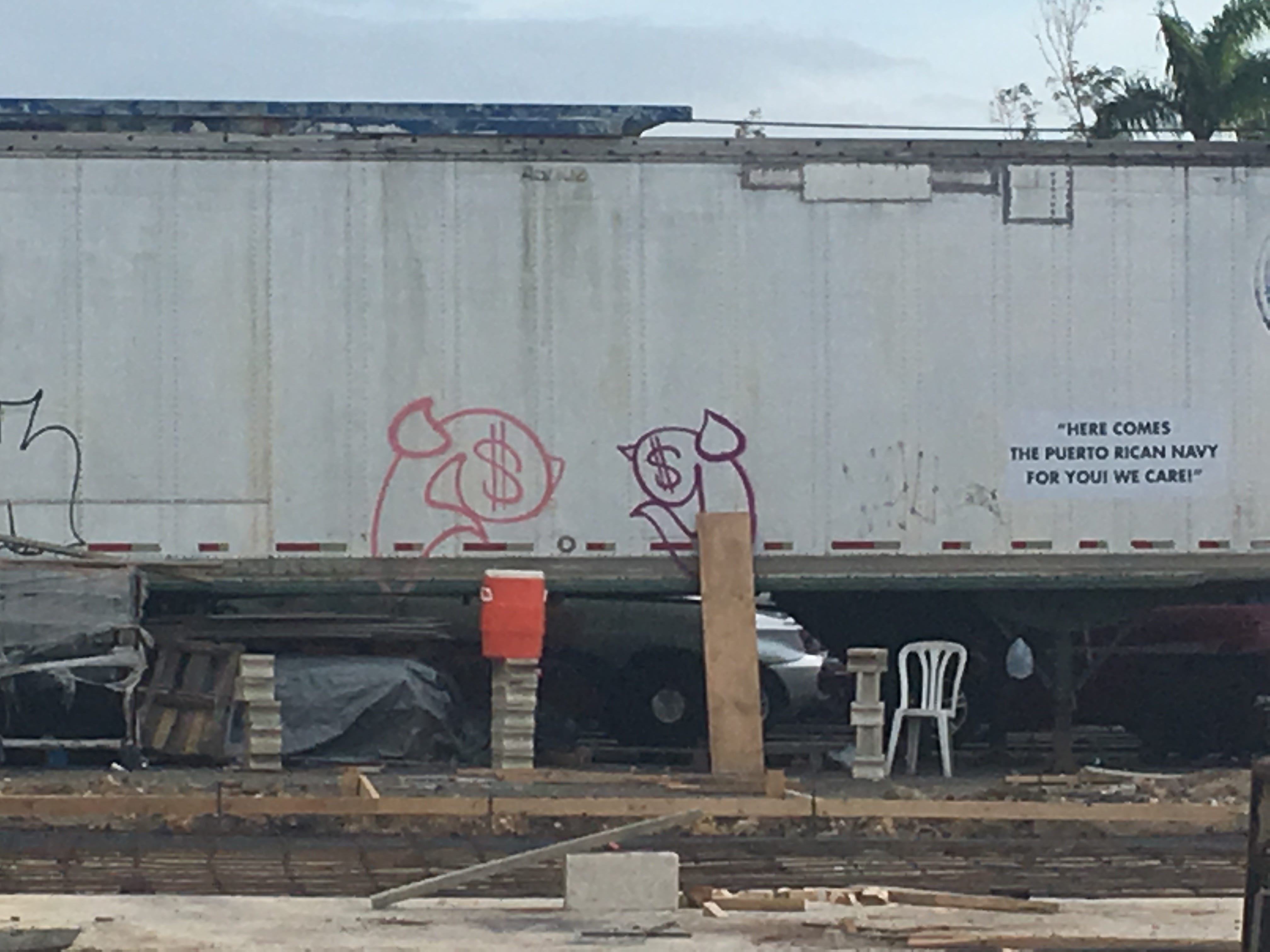
Caco is an expression of what Frank Wilderson III might deem “savage negrophobia,” a form of anti-blackness specific to dispossessed and genocided indigenous peoples. Contemporary use of the term likely coincides with the rise in popularity of rap and reggaeton on the island in the early 90s and likely originates in the homes of educated middle/upper-middle class Puerto Rican whites—evident perhaps in its neoclassical roots, from the Greek Kakos or Cacus, as in kakistocracy or a mythological chupacabra strangled by Hercules. Though of its precise origins and first use in this Puerto Rican sense, I’m not certain. It more likely emerges as a popular pejorative term in the 2000s, after reggaeton skyrockets in popularity on mainstream media outlets with hits like Daddy Yankee’s “Gasolina” (2004) and N.O.R.E.’s “Oye Mi Canto” (2004). Cacoteo Radio, founded by DJ Tito[1] (of Loiza, PR) with his friend Lemuel Hernandez (of Tampa, FL) in 2007, also cites Tego Calderon’s 2002 hit “Cosa Buena” as one of the culture’s launch pads. Still a bop. In any case, its association with a subculture of music on the island is evident (despite, or perhaps because of, its worldwide popularity). Cacos are marked by their closeness to and participation in black urban culture, without necessarily themselves bearing identifiable African phenotype. It’s not black people, it’s black culture that’s vilified here, imported variously from other Caribbean countries or Latin American or (worst of all) the states; their manner of speech as percussive as the dembow beats they listen to or rap over, their fashion sense favoring street style (baseball caps, flashy bling, oversized or extra tight pants and shirts). In addition to these outward expressions of urban affinity, cacos are commonly associated with poverty, crime, drugs, sexuality, and bestial aggression. Like Agotes, cacos come from or live in “el barrio,” which might be a neighborhood geographically and historically set apart for poor whites and former slaves (la Perla) or a modern housing project (Llorens Torres). It further implies a person who, out of foolishness or stupidity, has failed to make something of themself—very much a critique in line with the sort of respectability politics rampant across the Caribbean. Here is Bad Bunny, for example, when he raps on “Ser Bichote” (2018):
Mami quería que yo fuera un ingeniero
Papi quería un pelotero
Mi maestra de segundo me dijo que fuera bombero
Nah, yo vo’a hacer lo que yo quiero
Siempre quise to’as las tenis y to’as las gorras (¡Wouh!)
El Pitbull, la BM, la cotorra
El Polaris, dejar que el nene lo corra
Un tatuaje no se borra
The above lyrics highlight both the communal expectation that he become a professional (Mom wanted me to be an engineer / Dad wanted a baseball player / My second grade teacher said I’d be a firefighter) and his desire to participate instead in urban (black) culture (sneakers, baseball caps, Pitbull, tattoos, the three-wheel Polaris roadster that makes even me clutch my pearls in distaste). This sets up an ugly and common duality. One can either choose professional respectability, or abject blackness—the caco has chosen abject blackness. Born Benito Antonio Martínez Ocasio in the suburban neighborhood of Almirante Sur, Bad Bunny grew up in a middle class family far away from the urban glamor life he was attracted to. Later in the song he raps “Aquí to’ el mundo es calle / Por dentro siempre voy a ser caco”—”Here tha whole world is street / I’ll always be caco on the inside”. It’s a way of coding his rebellious otherness, his hidden blackness, not uncommon among white or white-passing pop stars whose claim to everything but the burden persists only as long as it’s economically viable (cool) to do so. Given time and a change of mood (or zeitgeist), Bad Bunny could rebrand himself a heartbroken crooner of bolero, or a romantic country-folk singer, and his bank account wouldn’t know the difference.
Despite popular appropriations of the term, caco above all functions as a form of anti-blackness that divides what is proper within the social structure from what is not. While not a slur directed against black bodies per se (as it’s mostly used to denigrate socially mobile whites, like agote was used between vecinos), the sign situates itself in contradistinction to the national narrative of the noble savage, the mestizo Puerto Rican who’s emerged from the abyssal commingling of races on the lighter side of life, and can make free claims to Africanness and indigeneity from the relative comfort of whiteness.
Among conservative Puerto Ricans of all classes, the idea that reggaeton or latin trap is a global phenomenon chafes against a desire for the island and its people to be regarded as bearers of a worldly and dignified culture (as opposed to the sultry, oversexed pit of vice and violence that rap and reggaeton imply). This constant tension between respectability and perceived abjection is the source of an ever widening (crisis-level) gap between classes on the island. More and more gated communities with private schools are being erected while public schools are closing, poverty is growing, people are leaving, and PROMESA promises to restructure the debt (i.e. collect its souls).
The phenomenon of the caco is relatively new in comparison to the long arc of the cagot/agote, two decades hardly a breath in the scope of a thousand years. And there are notable differences between the caco/cagot/agote. Not least of which is the caco’s association with an internationally celebrated musical mo(ve)ment. But if we’re not careful, the curious, quasi-ironic case of the cacomay become proving grounds for more insidious group identity formation on an island already divided by stark lines—lines that often mean life or death for those without access. Daily, in the wake of hurricane María, there are week-long power outages across the island. Vital infrastructure, like a fully operational hospital on Vieques, has yet to be rebuilt. And unfortunately, U.S. colonial dictates prevent Puerto Ricans themselves from addressing these issues (a “sun tax,” for example, on those who’ve invested in solar power).
In a racial utopia, where disparities in every discernible metric and outcome are dismissed as a peculiar social illness imported from the states, the temptation to truly scapegoat a swath of the population looms large. Like the proverbial coqui in its warm bath, unaware it’s resting on a burner, we may someday realize it’s too late—that we’ve gone beyond the point of no return and now occupy the afterlife of what was stolen from us.
Considering present efforts put forward by U.S. representatives with a vested interest in Puerto Rico and their Puerto Rican constituents, like the “Puerto Rico Statehood Admissions Act” (H.R. 1520), and the “Puerto Rico Self-Determination Act (H.R. 2070)”, one might have cause for hope. The latter especially, co-sponsored by representatives Nydia Velázquez (D-NY) and Alexandria Ocasio Cortez (D-NY) along with Senator Bob Menendez (D-NJ) proposes, rightly, that Puerto Rico should determine its political future—a long overdue motion to return agency to the people.
To recognize the right of the People of Puerto Rico to call a status convention through which the people would exercise their natural right to self-determination, and to establish a mechanism for congressional consideration of such decision, and for other purposes.
So long overdue, in fact, that it is highly unlikely to yield a cogent plan for decolonization of the island. Before the option of independence, the U.S. would be more likely to grant statehood—and considering how many democrats this would add to the union, further destabilizing a mentally unstable republican party, this is not likely to happen without another January 6th white nationalist insurrection. So I have little hope that, after centuries, Puerto Rico will finally achieve sovereignty. Not for lack of effort, but for the resistance it would meet in every branch of a U.S. (colonial) government and that unofficial fourth branch known as white supremacy.
A month before the 2016 election I had a dream. Three impressively sleek and dangerous-looking wasps held a caterpillar aloft and gradually began to pull it apart in three different directions. The dream seemed to suggest that the very nature of the U.S. government, its tripartite system of checks and balances, was designed not only to prevent a dangerous concentration of power in one particular branch, but also to prevent any nascent form of agency capable of destabilizing the colonial slave-state. This country will never willingly cede its insular possessions, will not lift its knee from the neck of the people it’s robbing. Not as long as they continue to profit from the machinations of a genocidal-master regime.
The history of Cagots, Agotes, and now Cacos illustrates for me the lengths to which a social structure might manufacture an artificial deficit for the profit of a few. In lieu of embodied difference, those with a vested interest in preserving their power will construct a narrative to keep those beneath them pliant, impoverished, and afraid. It’s of utmost importance that we be aware of how these narratives evolve, how they decay, how they reemerge as semantic isotopes in places we’d never expect.
Take as a final example Percival Everett’s novel Telephone. Published by Graywolf Press in 2020, the novel was released as three different versions with three different endings. You wouldn’t really know this, had you the freedom to find it on a bookstore shelf in the middle of a COVID-19 pandemic. Each of the three editions, aside from slight but deliberate variations in the cover (and on the ISBN), looked alike. It’s a fun idea and a fairly well-written novel. In keeping with my propensity for bad luck, I was fortunate enough to receive in the mail the version widely deemed “the bad ending” or the “C” edition. Now here comes one-third of a spoiler: By novel’s end, our quasi-objectivist black protagonist is riding a hijacked bus full of undocumented Mexican women he’s rescued (with the help of some ragtag poets) from an illegal sweatshop in the southwest. His goal is to drive them back home, across the border. Alas, our great American hero is foiled. The bus breaks down before they reach the border and one of the women has lost so much blood (from a gunshot wound), that they have no choice but to see a doctor. He arrives, on foot, at a clinic, with his gaggle of rescued Mexican women—so painfully close to the border, so close to the prospect of freedom and reunion and redemption (for our disaffected American hero especially). Still, there is the matter of getting this woman urgent help:
“Our friend needs some medical attention,” I said.
The woman burned a look right through me. “What is wrong with her?”
“She’s been shot,” I said.
The woman looked at Rosalita and then at the other women. She fidgeted with her pencil and looked back into the office. “We generally are required to report all gunshot treatments.”
“Her arm is bleeding,” I said. “I believe she has lost a lot of blood.”
“Carlos!” she called back. “What is her name?”
“Maribel,” Rosalita and I said together.
“Occupation?”
“Slave,” I said.
The clerk stared at me. I looked away, out the window, at the parking lot, at moving cars. It was raining again.
What does one do with the idea that an American slave-state has replaced its black bodies with Mexican slaves? Frank Wilderson III would not agree with the premise. In part because these kidnapped women, while forced into conditions of chattel slavery and labor, are not categorically slaves. They are kidnapped Mexican citizens—and the possibility of their return home is the general vector of the novel’s latter half. Elsewhere in the novel, Everett’s protagonist casually refers to the white men who’ve kidnapped these women as Nazis—another cringe worthy effort to vilify what is ostensibly just an archetype of American. These false equivalents chafe against my (and perhaps Wilderson’s) sense of history. Nevertheless, Everett’s analogues (American white male as Nazi, undocumented Mexican woman as slave, educated black male as liberator) are not exclusively wrong, they simply point to yet another instance in the semantic evolution and understanding of the narratives that bind us.
What matters finally is how we recognize and respond to systemic conditions that threaten the well-being of the “least” of us. “For we wrestle not against flesh and blood, but against principalities, against powers, against the rulers of the darkness of this world, against spiritual wickedness in high places.” (Ephesians 6:12 KJV). And let the Church say, Amen. As we live and breathe on this planet, by dint of decay and our endless need to consume, we are violence. We cannot escape this history of trespass and the particular part we’ve played in it. But this should stop us from standing in the way of things as they are.
Don’t be afraid of what awaits you at the end of the world.
[1] DJ Tito via Twitter Direct Message (6/7/2021): “I chose the name “Cacoteo” because the word was reflective of the music, culture, & style that encompassed Reggaeton, Hiphop, Dancehall/Reggae & House during the “Underground” days in Reggaeton music’s beginnings in PR during the early 90’s. Caco or Kako was a word that was originally used in a derogatory form to describe people who listened to & partook in Rap, Reggae, & Underground “Reggaeton” as the music was not yet accepted by the mainstream. Many artists & fans of popular genres in PR like Salsa, Merengue, Bachata, & Rock, disassociated from & shunned “Rap y Reggae” as low-class & would refer to the artists & fans of the music as cacos/kakos. Some say the word is in reference to 💩 whereas some say it comes from the word “cacofonia” - hard discordant mixture of sounds also synonymous with delinquent & disruptive behavior. Now that Reggaeton & Latin Hiphop has gone mainstream & is widely accepted, you have “Reggaetonero” whereas the negative connotation became positive, “Caco” is used as a purist description for someone who takes part in Reggaeton Hiphop or Dancehall music & culture & “CACOTEO” embraces all of that 🇵🇷✌🏽
How grouchy one
alone with his gripes
		and bit by bit fading
		week to week.
How sad to watch oneself,
living on the clock.

(my translation of Efe's poety)
Post Script: The etymological root of caco is explained by the greek myth of Cacus, a giant monster that was defeated by Hercules. The use of caco was documented, and inserted into the Hispanic imaginary when Cervantes transliterated Cacus in Don Quijote: “el socarrón, que no es más ladrón que Caco ni más fullero que Andradilla, no quería darme más de cuatro reales…” So caco came to mean thief, criminal. Caco in Puerto Rico is used pejoratively for people who participate in subcultures associated with crime, it is a classist, and, as you rightly pointed out, racist use of thief as a stigma to generalize a racialized lower-class. I wonder if your very interesting dive into the term cagot and its own relation to caco could reveal any connection to Cervante’s use of caco? (—Alexandra Algaze González) 2/25/22